 Save
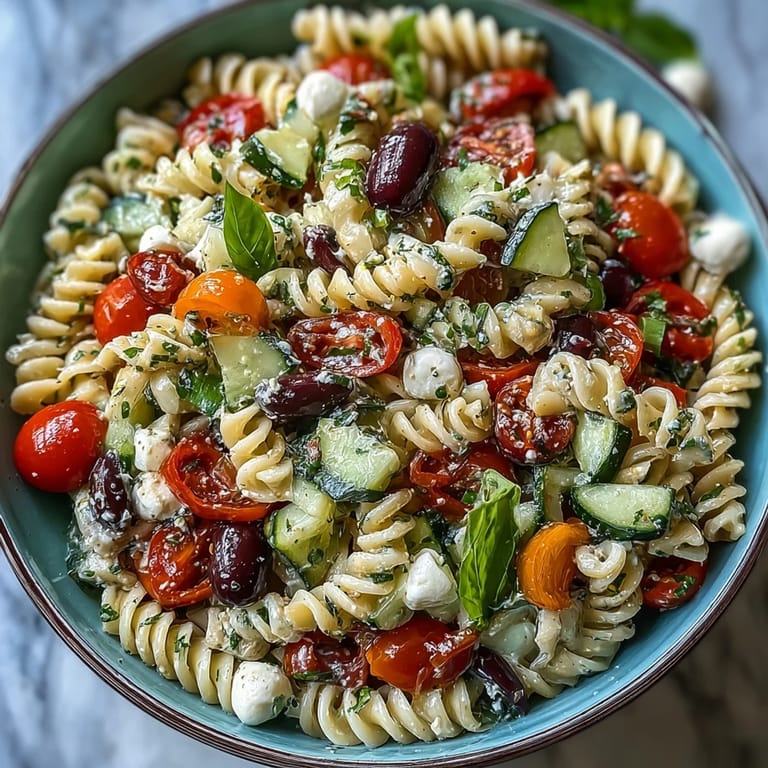
Save My cousin texted me last summer asking what to bring to her backyard party, and I almost panicked until I remembered this pasta salad sitting in my fridge from the day before. It was bright, tangy, and somehow even better than when I'd made it. Everyone kept coming back for more, and by the end of the afternoon, the bowl was scraped clean with just a few oil-slicked cherry tomatoes left behind. That's when I realized this wasn't just a side dish—it was the kind of thing that makes people actually excited about what's on the buffet table.
I made this for a July potluck where everyone showed up with store-bought containers and tired expressions, and watching people actually slow down to savor something I'd put together felt like a small victory. One of my friends even asked for the recipe, which meant more to me than any compliment about the weather or someone's new kitchen renovation.
Ingredients
- Short pasta (rotini, fusilli, or penne): 350 g (12 oz) Choose the shapes with ridges and twists because they catch the dressing better than smooth tubes, and trust me, that makes all the difference in every forkful.
- Cherry tomatoes: 1 cup, halved Halving them releases just enough juice to flavor the salad without making it watery, and their sweetness balances the vinegar perfectly.
- Cucumber: 1 cup, diced Cut it into roughly the same size as your tomatoes so nothing dominates and everything feels intentional.
- Red and yellow bell peppers: 1/2 cup each, diced The colors matter more than just looking pretty—they're actually different flavors, with red being sweeter and more mellow than the grassy green ones.
- Red onion: 1/4 cup, finely chopped A little goes a long way here because raw onion has bite; finely chopping it distributes that sharpness so it enhances rather than overwhelms.
- Black olives: 1/4 cup, sliced Kalamata or Castelvetrano both work, but Castelvetrano are buttery and mild if you want to keep things gentle.
- Mozzarella pearls or diced mozzarella: 3/4 cup (90 g) Add these right before serving if you want them to stay creamy, or toss them in early if you prefer them to soften and absorb the dressing.
- Fresh parsley: 2 tbsp, chopped Parsley isn't just garnish here—it adds a fresh green note that wakes up your palate between bites.
- Fresh basil: 1 tbsp, chopped (optional) If you have it, use it; if not, don't stress because parsley carries the salad beautifully on its own.
- Extra-virgin olive oil: 1/3 cup (80 ml) This is where you taste the difference between a good oil and a great one, so use something you'd actually drizzle on bread.
- Red wine vinegar: 3 tbsp The acidity level is what makes this sing, so don't swap it for white vinegar without tasting as you go.
- Dijon mustard: 1 tsp This tiny amount emulsifies the dressing and adds a subtle depth that people usually can't identify but always notice is missing if you leave it out.
- Garlic: 1 clove, minced One clove is exactly enough to make its presence known without turning the whole thing into garlic bread salad.
- Dried oregano: 1/2 tsp This is the herb that says Italian, so don't skip it even though it seems small and inconsequential.
- Salt and black pepper: 1/2 tsp salt, 1/4 tsp pepper Start with this amount, then taste before serving and adjust because pasta and vegetables taste more seasoned after they've been sitting in the dressing for a while.
Tired of Takeout? 🥡
Get 10 meals you can make faster than delivery arrives. Seriously.
One email. No spam. Unsubscribe anytime.
Instructions
- Cook the pasta until just barely tender:
- Bring a large pot of salted water to a rolling boil and drop in the pasta, watching the clock and tasting a minute before the package says it's done because you want it to have a slight resistance when you bite it. The moment it feels right, drain it in a colander and run it under cold water while stirring gently, stopping once it's cool enough to touch but still slightly warm.
- Shake the dressing together:
- Pour the olive oil, vinegar, mustard, minced garlic, oregano, salt, and pepper into a jar with a tight lid and shake it hard for about a minute until it's cloudy and emulsified. If you don't have a jar, whisk everything together in a small bowl, but honestly the jar method feels easier and makes you feel like you're doing something decisive.
- Build the salad in layers:
- Tip the cooled pasta into a large mixing bowl and add all the vegetables and mozzarella, then pour the dressing right over the top. Toss everything together with your hands or two big spoons until the pasta is glistening and nothing is sitting in a dry pocket at the bottom.
- Add the fresh herbs:
- Scatter the chopped parsley and basil over everything and give it one more gentle toss so the herbs are distributed throughout rather than concentrated in one spot. Taste one small forkful right then and adjust the salt or vinegar if it needs it.
- Let it chill and bloom:
- Cover the bowl and refrigerate for at least 30 minutes before serving, which allows the pasta to fully absorb the dressing and all the flavors to settle into something greater than their separate parts. You can make this up to one day ahead and actually improve its flavor as it sits.
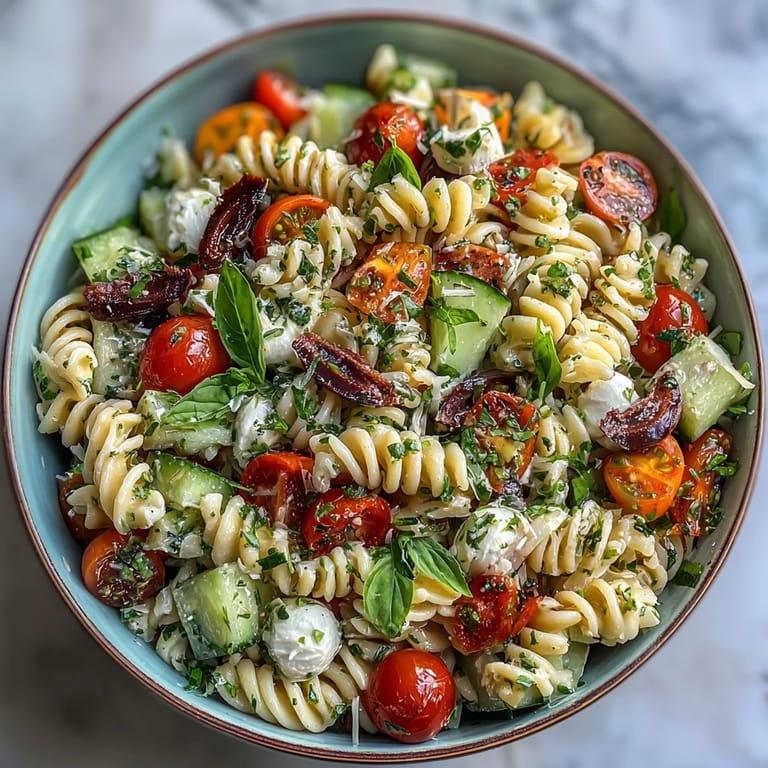 Save
Save There was a moment during that potluck when I caught my friend taking a second helping while genuinely smiling, and I understood that cooking for people isn't about impressing them—it's about giving them permission to relax and enjoy something simple. That's what this salad does.
Why This Works as a Make-Ahead Dish
The beauty of pasta salad is that it gets better as it sits in the fridge, with the pasta absorbing the dressing until every grain is flavorful rather than just coated. I've learned to make it the morning of an event or even the day before, which means I can actually wear something that doesn't have pasta water splashed on it when people arrive.
How to Adjust It Without Losing the Plot
This recipe is forgiving in ways that make it fun to play with once you understand the basic structure of pasta plus vegetables plus bright dressing. You can swap the bell peppers for zucchini, add chickpeas or grilled chicken for protein, or even toss in some artichoke hearts if you're feeling fancy on a Tuesday.
Small Moves That Change Everything
The difference between a sad pasta salad and one people actually ask about comes down to a few quiet choices—using real olive oil instead of vegetable oil, tasting and adjusting the seasoning, and not skipping the chill time even though your kitchen smells ready to eat. These aren't fancy techniques; they're just respecting your ingredients and your future self who will enjoy this salad far more if you take an extra ten minutes now.
- Chop everything into roughly the same size so the salad feels intentional and balanced rather than chaotic.
- Make the dressing in a jar and shake it hard so the oil and vinegar actually emulsify instead of separating on top of everything.
- Taste before serving and don't be shy about adding more salt, vinegar, or a tiny drizzle more oil because cold food needs bolder seasoning than warm food.
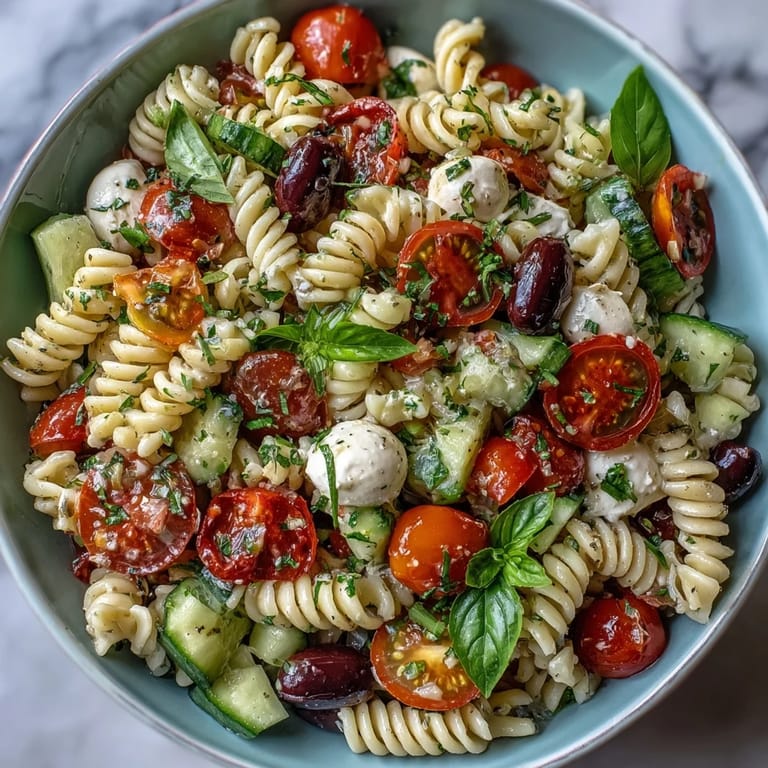 Save
Save This pasta salad became my go-to for every summer event because it tastes good, looks inviting, and doesn't demand anything from me once it's made. That's worth more than any fancy recipe could offer.
Recipe FAQs
- → What pasta types work best for this salad?
Short pasta shapes like rotini, fusilli, or penne hold the dressing well and mix evenly with the vegetables.
- → Can I prepare the salad ahead of time?
Yes, chilling the salad for at least 30 minutes enhances the flavors. It can be refrigerated up to one day in advance.
- → How can I add protein to this dish?
Incorporate cooked diced chicken or chickpeas to increase protein content without altering flavors much.
- → Are there good cheese alternatives to mozzarella here?
Feta cheese can be used instead of mozzarella for a tangier twist that complements the dressing well.
- → What can I serve alongside this pasta salad?
This salad pairs nicely with crisp white wine or a refreshing sparkling lemonade for a balanced meal.