 Save
Save My daughter came home from school one afternoon asking why her lunchbox snacks always got soggy by noon. That question sent me on a mission to create something that would stay crisp, travel well, and actually taste good enough that she'd finish it. These snack cups were born from that simple problem—hummus at the bottom keeps everything fresh, and the veggies stay crunchy for hours. It's become our secret weapon for field trips, car rides, and those moments when hunger strikes at inconvenient times.
I still laugh remembering the time I made these for my nephew's soccer tournament. He opened his snack cup during halftime, and his teammates immediately started asking where he got them—kids actually wanted to trade snacks, which never happens. Watching him proudly explain that his aunt made them taught me something: food doesn't need to be complicated to make people happy, it just needs to be thoughtful.
Ingredients
- Hummus: Use 1 1/2 cups of your favorite variety, whether store-bought or homemade—it's the foundation that keeps everything moist and delicious, plus it provides plant-based protein that makes these genuinely filling.
- Carrots: One large carrot peeled and cut into sticks offers natural sweetness and that satisfying crunch that stays firm even after sitting in a lunchbox for hours.
- Cucumber: One large cucumber cut into sticks brings refreshing coolness and pairs beautifully with hummus, though they do soften slightly over time so prep them just before packing if you can.
- Red bell pepper: Seeded and cut into strips, this adds vibrant color and a crisp texture that survives travel remarkably well.
- Yellow bell pepper: Similar to red but slightly sweeter, these strips brighten the cup visually and taste wonderful alongside the red variety.
- Snap peas: Use 1 cup trimmed and whole for the most satisfying crunch—they're sturdy enough to stand upright in hummus without getting mushy.
- Cherry tomatoes: A full cup tossed in whole adds bursts of flavor and juiciness, though fair warning they can roll around a bit during transport.
- Celery sticks: Optional 1/2 cup adds extra crunch and stays fresh longer than most vegetables, though some kids find the taste too bitter so gauge your audience.
- Jicama sticks: Optional 1/2 cup brings a unique crispy-sweet quality that people rarely expect and often request more of.
Tired of Takeout? 🥡
Get 10 meals you can make faster than delivery arrives. Seriously.
One email. No spam. Unsubscribe anytime.
Instructions
- Wash and prep like you mean it:
- Run all vegetables under cool water and pat them completely dry—any lingering moisture will soften them faster than you'd think. This is the one step that genuinely matters for keeping things crisp through the day.
- Divide the hummus base:
- Scoop approximately 1/4 cup of hummus into each of your 6 small cups, spreading it so it covers the bottom evenly. This creates your protective layer and makes the dipping experience infinitely better.
- Stand vegetables upright like a little garden:
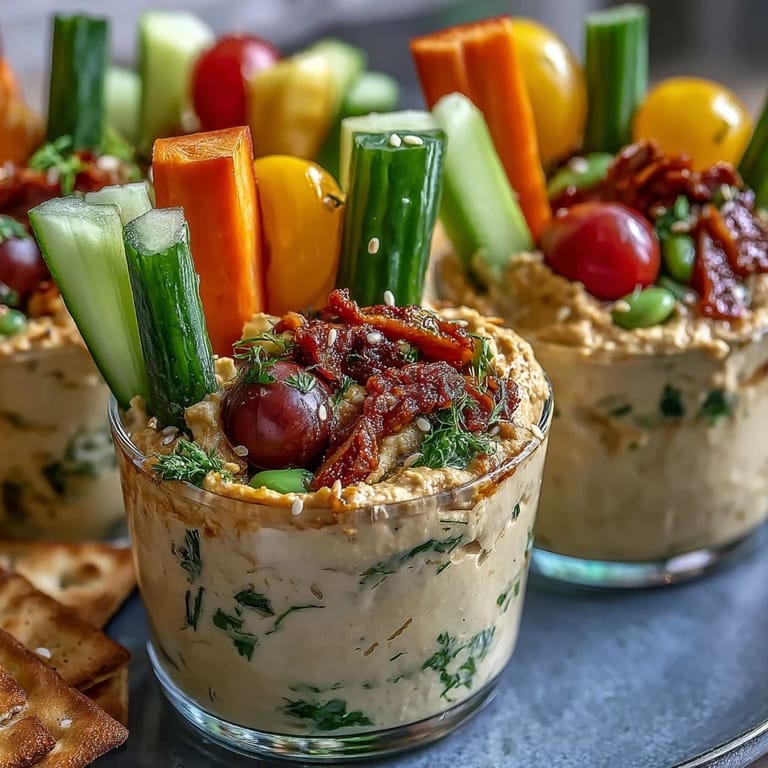
- Arrange carrot sticks, cucumber sticks, pepper strips, and snap peas standing vertically in the hummus as if they're growing from the ground—this presentation looks inviting and makes grabbing them easy. The hummus holds them steady while keeping them fresh.
- Tuck in the delicate items:
- Place cherry tomatoes in the gaps and press them gently into the hummus so they won't roll around when the lid closes. If using jicama or celery, slot them in wherever there's space.
- Cover and chill until departure:
- Seal with lids and refrigerate until you need them—they'll actually taste better after sitting for an hour or two as flavors mingle slightly. They stay fresh for up to 2 days, though they're best consumed within 24 hours for peak crispness.
 Save
Save There's something special about watching someone open one of these cups and their whole face light up at the sight of so much colorful freshness arranged so neatly. It's just vegetables and hummus, but presented this way it feels almost gourmet, like you spent hours planning something luxurious when really you just spent fifteen minutes being smart about snacking.
Flavor Boost Ideas
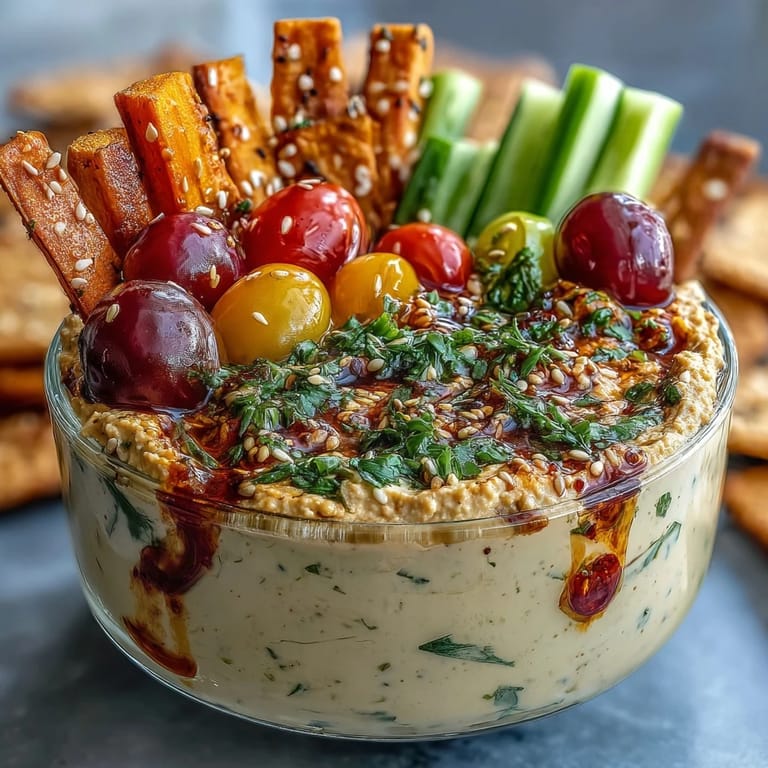
Plain hummus is wonderful, but sometimes a little flavor enhancement makes the whole experience feel special. Sprinkle paprika, sumac, or zaatar directly over the hummus before adding vegetables for a subtle flavor shift that makes people ask what you did differently. A light drizzle of good olive oil with a pinch of black pepper takes things up another notch, and I've even scattered crushed red pepper flakes for guests who like a gentle heat with their snacking.
Seasonal Vegetable Swaps
The beauty of this recipe is its flexibility depending on what's fresh and available. Summer screams for blanched green beans and fresh radish slices, while fall begs for baked beet sticks and thinly sliced kohlrabi. Winter is your moment for roasted Brussels sprout chips and parsnip sticks, and spring welcomes tender asparagus and fresh green garlic strips if you can find them. The hummus works with literally everything, so trust your seasonal instincts and the produce that looks most vibrant at your market.
Storage and Make-Ahead Magic
These cups are the ultimate make-ahead snack because assembly happens in minutes and they actually improve as they sit. I prep six cups on Sunday evening and forget about snacking stress for the entire week, which feels like cheating in the best way possible. Store them in the coldest part of your fridge, and they'll stay fresh and crisp for up to 2 days—any longer and the vegetables start releasing water that softens their texture.
- Cut vegetables on Sunday and store them separately in the crisper drawer, then assemble cups each morning for absolute peak freshness if you're willing to spend five extra minutes.
- Invest in small mason jars with tight-sealing lids because they're leak-proof for travel and infinitely more durable than flimsy plastic cups.
- Keep a batch assembled at all times during busy seasons because reaching for a pre-made snack cup beats the vending machine or drive-through every single time.
 Save
Save These snack cups have become such a quiet hero in my kitchen that I don't even think about making them anymore—they just happen. They've solved the soggy lunchbox problem, impressed picky eaters, and made me look thoughtful without requiring actual effort, which is the recipe for any kitchen win.
Recipe FAQs
- → What vegetables work best in these snack cups?
Fresh carrots, cucumbers, bell peppers, snap peas, and cherry tomatoes are ideal for crunch and flavor. You can also try celery, jicama, or blanched green beans.
- → How should I store the snack cups?
Keep them covered in the refrigerator and consume within two days for the freshest taste and texture.
- → Can I add more protein to these cups?
Yes, adding baked tofu sticks or cheese cubes can increase protein content, provided dietary preferences are met.
- → Are there flavor variations I can try?
Sprinkle the hummus with spices like paprika or zaatar, or drizzle olive oil before adding vegetables for added depth.
- → What tools do I need to prepare these snack cups?
A sharp knife, cutting board, and small lidded cups or jars are needed to slice vegetables and assemble the cups.