 Save
Save Spring in our house always meant my grandmother would appear with armfuls of asparagus from the farmers market, declaring today was the day for that casserole. She never measured anything, just knew by feel when the sauce was right, and I spent years trying to capture that particular magic in my own kitchen. The first time I made it for friends, they actually scraped the baking dish clean with their forks.
I made this for Easter dinner last year, watching my skeptical cousin tentatively try a small portion before going back for thirds. Now she texts me every spring asking exactly which cheeses I used, as if Im guarding some ancient family secret instead of just following basic cream sauce physics.
Ingredients
- Fresh asparagus: The thinner spears work beautifully here, though thick ones give you more substantial bites to sink into
- Unsalted butter: Starting with unsalted lets you control exactly how much salt goes into your sauce
- Allpurpose flour: This creates the roux that transforms milk and cream into velvety magic
- Whole milk and heavy cream: The combination gives you richness without becoming overwhelmingly heavy
- Gruyère or Swiss cheese: These melt into that gorgeous, nutty creaminess that makes the dish feel special
- Grated Parmesan: Adds a salty, savory depth that balances the mild cream sauce
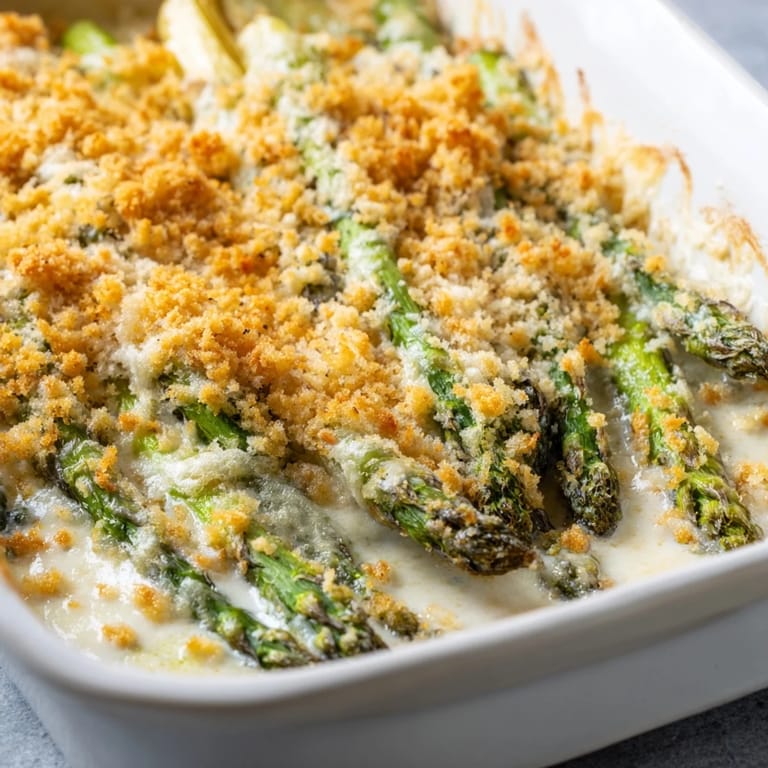
- Fresh breadcrumbs: They create that irresistible golden crust that makes everyone lean in when the dish comes out of the oven
Tired of Takeout? 🥡
Get 10 meals you can make faster than delivery arrives. Seriously.
One email. No spam. Unsubscribe anytime.
Instructions
- Get your oven ready:
- Preheat to 400°F and grease your baking dish so nothing sticks later
- Blanch the asparagus:
- Drop those trimmed spears into boiling salted water for just 23 minutes until they turn bright green, then pat them completely dry
- Build the roux:
- Melt butter over medium heat, stir in flour, and let it cook for a full minute while stirring constantly
- Create the sauce:
- Whisk in milk and cream gradually, keep stirring until thickened and smooth like velvet
- Add the cheese:
- Remove from heat and stir in half your Gruyère and all the Parmesan until melted
- Assemble everything:
- Lay your asparagus in the dish, pour that luscious sauce over them, and sprinkle with remaining cheese
- Make the topping:
- Toss breadcrumbs with melted butter and scatter them evenly across the top
- Bake until golden:
- Let it bake for 2025 minutes until bubbling and beautifully browned on top
- Let it rest:
- Those five minutes of patience help the sauce set so it doesnt run everywhere when you serve
 Save
Save My friend Sarah texted me at midnight once, saying she was standing in her kitchen eating leftover casserole cold from the fridge and didnt even regret it. That is the highest compliment I can imagine.
Choosing Your Asparagus
I have learned that pencilthin asparagus cooks faster and feels more elegant, while thick stalks give you something meatier to bite into. Either works, but try to pick spears that are roughly the same size so they cook evenly.
Make Ahead Magic
You can assemble everything up to a day before, cover tightly, and refrigerate until ready to bake. Just add five extra minutes to the baking time since you are starting from cold.
Serving Suggestions
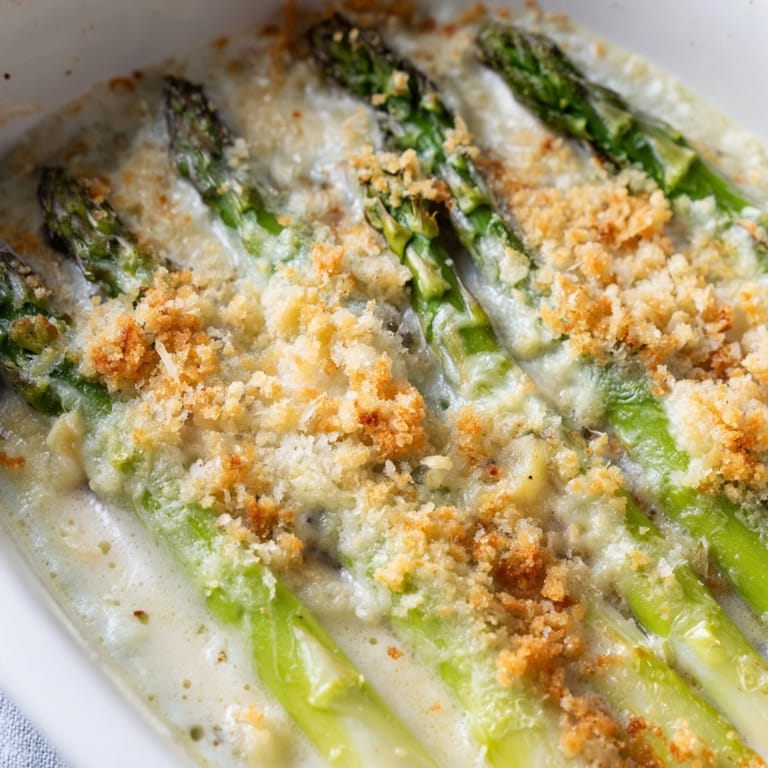
This works beautifully alongside roasted chicken or ham, but honestly stands alone as a vegetarian main with a simple green salad. The key is letting people see that gorgeous golden crust before you even set it on the table.
- A glass of crisp white wine cuts through the creaminess perfectly
- Lemon wedges on the side let people adjust brightness to taste
- Fresh chives sprinkled on top add color and mild onion flavor
 Save
Save Hope this brings the same spring joy to your table that it has brought to mine over the years.
Recipe FAQs
- → Can I make this ahead of time?
Yes, assemble the entire casserole up to 24 hours in advance, cover tightly, and refrigerate. Add an extra 5–10 minutes to the baking time if baking cold from the refrigerator.
- → What cheese works best?
Gruyère offers excellent melt and nutty flavor, but Swiss, Fontina, or sharp cheddar make delicious alternatives. For a budget-friendly option, use mozzarella mixed with Parmesan.
- → Do I need to blanch the asparagus first?
Blanching ensures the asparagus cooks evenly and maintains its vibrant green color. Skipping this step may result in unevenly cooked or overly fibrous spears.
- → Can I freeze this casserole?
Freezing is not recommended as the cream sauce may separate and the breadcrumb topping will lose its crisp texture. This dish is best enjoyed fresh or refrigerated for up to 3 days.
- → How do I know when it's done?
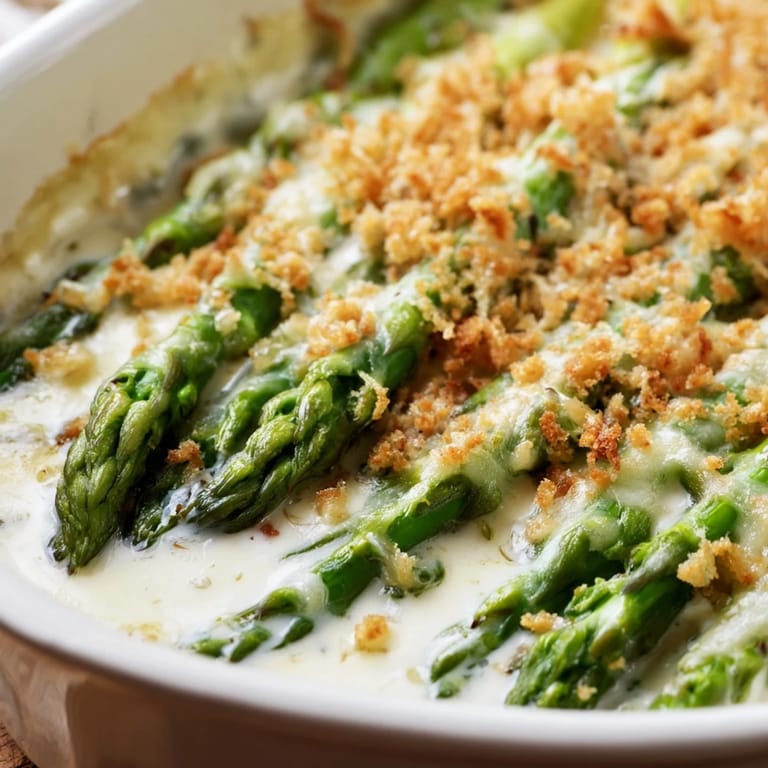
The casserole is ready when the cheese sauce is bubbling around the edges and the breadcrumb topping has turned golden brown, typically after 20–25 minutes in a 400°F oven.
- → Can I use frozen asparagus?
While possible, frozen asparagus tends to become mushy and lacks the crisp-tender texture of fresh spears. If using frozen, thaw completely and pat dry thoroughly before proceeding.