 Save
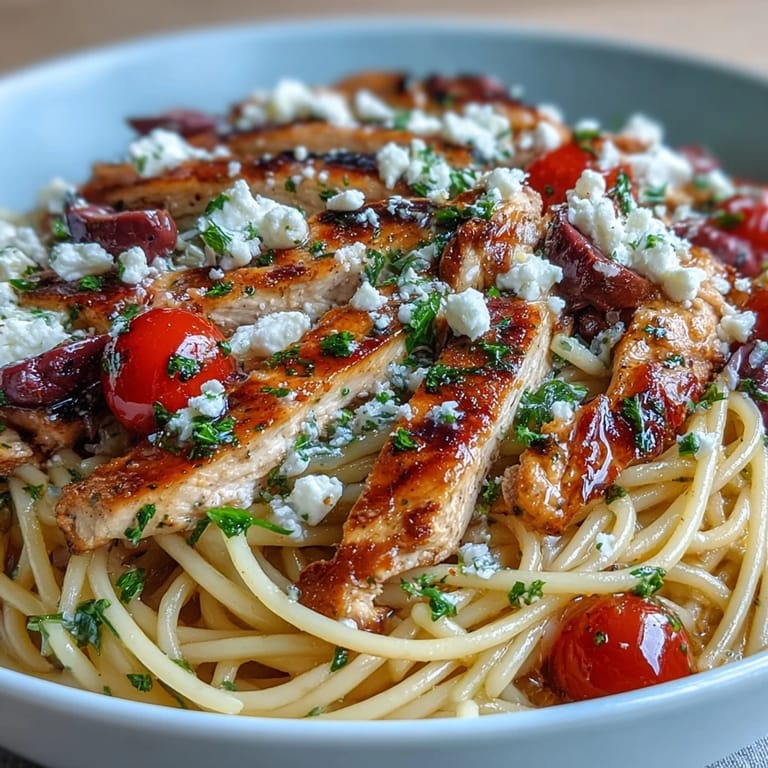
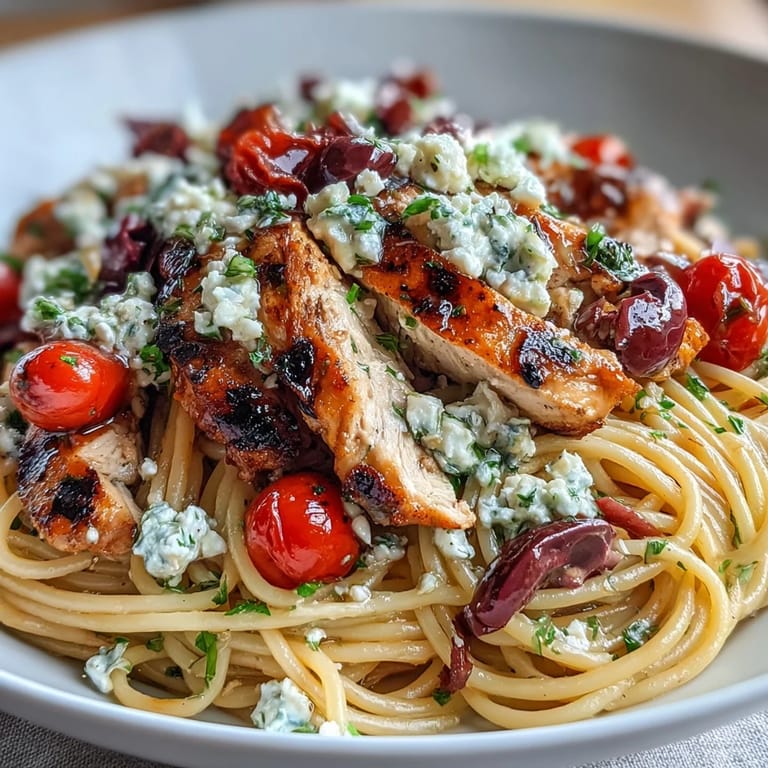
Save My neighbor Maria stopped by one summer evening with a bag of tomatoes from her garden, and I found myself rifling through my pantry for olives and feta. That's when this Greek chicken spaghetti came together—not from a recipe, but from the kind of improvisation that happens when Mediterranean flavors call to you. The dish felt like a conversation between simplicity and brightness, each ingredient speaking clearly without competing. It became the meal I make when I want to feel like I'm eating somewhere sunny, even on ordinary weeknights.
I made this for friends on a Friday night when I was feeling brave enough to cook without much advance planning. Someone brought wine, someone else brought bread, and by the time I plated everything, the kitchen smelled so good that the whole evening shifted into something special. It was the moment I realized this dish has a kind of magic—it looks elegant enough to impress, but feels casual enough that everyone relaxes into eating it.
Ingredients
- Chicken breasts: Use boneless, skinless ones so they cook evenly and stay moist; pound them gently to an even thickness if they're particularly thick.
- Extra-virgin olive oil: This is where quality matters most—use a good one for the dressing because you'll taste it directly on the finished dish.
- Spaghetti: Don't skip reserving that pasta water; the starch helps the sauce cling beautifully to every strand.
- Cherry tomatoes: Hunt for ripe, fragrant ones; they're the backbone of freshness here and deserve respect.
- Kalamata olives: Pit them yourself if you can find unpitted ones—they tend to taste brighter and less metallic.
- Feta cheese: Crumble it just before serving so it stays creamy rather than drying out.
- Fresh lemon juice: Squeeze it yourself; bottled juice tastes flat compared to the brightness real lemons bring.
- Fresh parsley: This isn't decoration—it's a flavor layer that adds herbaceous lift at the last moment.
- Red onion: The raw sharpness mellows slightly as it cooks, but keep the heat moderate so it doesn't turn bitter.
- Garlic: Mince it small so it disperses evenly and cooks gently rather than charring.
Tired of Takeout? 🥡
Get 10 meals you can make faster than delivery arrives. Seriously.
One email. No spam. Unsubscribe anytime.
Instructions
- Season and grill the chicken:
- Pat your chicken breasts dry, then brush them lightly with that tablespoon of olive oil and sprinkle generously with oregano, salt, and pepper. A grill pan on the stovetop works just as well as an outdoor grill—let it heat until it's genuinely hot before the chicken touches down, and you'll hear that satisfying sizzle that means you're building flavor.
- Cook until golden:
- Let each side have about 6 to 7 minutes without moving the chicken around; you want those grill marks and a golden crust. The juices should run clear when you poke the thickest part, which is your signal that it's done.
- Rest and slice:
- This 5-minute rest is non-negotiable—it lets the juices redistribute so each slice stays tender rather than running all over your plate.
- Boil the pasta:
- While the chicken rests, get your salted water boiling hard and cook the spaghetti until it's al dente, meaning it still has a slight firmness when you bite it. Scoop out that half cup of pasta water before draining—this starchy liquid is liquid gold for making the sauce silky.
- Build flavor in the skillet:
- Heat your two tablespoons of olive oil over medium heat and watch it shimmer, then add the garlic and red onion. They should soften in about 2 minutes, and that's when the kitchen starts smelling incredible.
- Add the tomatoes:
- The cherry tomatoes only need 3 to 4 minutes to soften and release their juice; you want them tender but not collapsing into sauce.
- Bring everything together:
- Add the cooked spaghetti and olives to the skillet along with a splash of that reserved pasta water, and toss gently but thoroughly so the pasta absorbs all those tomato and olive juices. Add more pasta water if it looks dry.
- Finish with brightness:
- Off the heat now—this keeps the lemon juice and vinegar from turning bitter from the residual heat. Stir in the lemon juice, red wine vinegar, and parsley, then add the sliced chicken and half the crumbled feta.
- Serve with ceremony:
- Divide among plates and top with the remaining feta and a bit more parsley if you're feeling generous. Serve immediately while everything is warm and the colors are still vibrant.
 Save
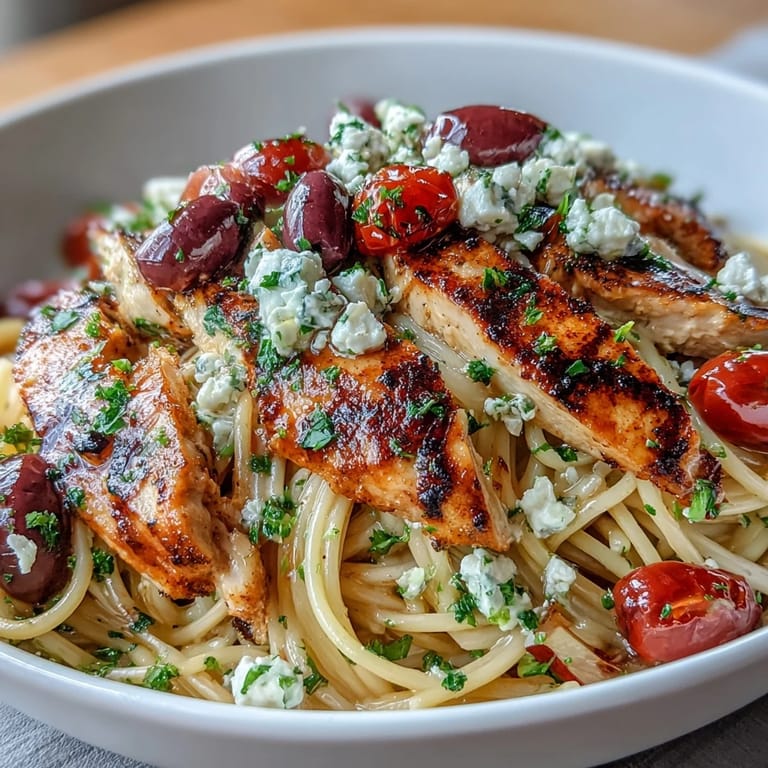
Save There's a moment that happens every time I make this—right when I add that fresh lemon juice and the whole dish wakes up—when someone in the kitchen takes a breath and says something like, 'wow, that smells like summer.' Those small moments of recognition, when simple ingredients become something that feels like travel on a plate, that's when food stops being just dinner.
Why Marinating Makes a Difference
One afternoon I had the luxury of time and marinated the chicken for an hour before grilling, and the depth was noticeably different. The olive oil, lemon juice, and oregano seeped into the meat, making it taste more intentional and complex. You don't need to plan hours ahead, but if you do have a free hour, combine two tablespoons of olive oil with the juice of half a lemon, a teaspoon of dried oregano, salt, and pepper, then refrigerate the chicken in that mixture. It's the kind of small preparation that quietly elevates everything.
Scaling This for a Crowd
The proportions scale beautifully if you're cooking for more people—just double or triple everything accordingly. The technique stays the same, though you might need to cook the chicken in batches so it browns properly rather than steaming. I've made this for eight people and for two, and the magic remains the same.
The Small Details That Matter
This dish lives and dies by freshness and by not overthinking it. The charm is in the simplicity, so resist the urge to add cream or heavy sauce; the lemon dressing and pasta water are enough. Watch your heat and respect each ingredient's timing, and you'll have something that tastes bright and alive rather than muddled.
- If your tomatoes don't smell fragrant and ripe, consider using good canned cherry tomatoes instead—taste matters more than fresh credentials.
- Taste your pasta water before using it; if it tastes good, it'll season your dish beautifully, and if it tastes like salt, use less.
- Have all your ingredients prepped and within arm's reach before you start cooking—this comes together fast, and there's no time to chop while things are sizzling.
 Save
Save This is the dish that reminds me why cooking for people matters. It's unpretentious and honest, full of good ingredients that taste like themselves, and it brings the kind of warmth that has nothing to do with temperature and everything to do with someone caring enough to cook something delicious.
Recipe FAQs
- → Can I use chicken thighs instead of breasts?
Yes, boneless chicken thighs work beautifully and stay juicy. Adjust grilling time to 5-6 minutes per side.
- → What can I substitute for feta cheese?
Try goat cheese, halloumi, or a sprinkle of grated Parmesan. Each brings a unique salty tang to the dish.
- → Is this dish good for meal prep?
Absolutely. Store components separately and combine when reheating. The pasta will keep for 3-4 days refrigerated.
- → Can I make this without a grill?
Pan-sear the chicken in a skillet over medium-high heat for 6-7 minutes per side until golden and cooked through.
- → What wine pairs well with this dish?
A crisp Greek white wine like Assyrtiko or Pinot Grigio complements the Mediterranean flavors beautifully.
- → How do I prevent pasta from sticking?
Reserve pasta water before draining and toss immediately with olive oil. The starchy water helps sauce cling to noodles.