 Save
Save My kitchen filled with the most unexpected aroma last Tuesday—ginger and maple mingling in a way I'd never quite experienced before. A friend mentioned she'd thrown together a glazed salmon in under twenty minutes, and I was skeptical until I tried it myself. The moment that golden, glossy glaze hit the pan and started to caramelize, I understood why she'd become obsessed. Something about sweet meeting savory with just a whisper of heat made me want to cook it again immediately. Now it's become my go-to when I want to feel accomplished without actually spending the evening in the kitchen.
I cooked this for my sister when she was going through a phase of trying to eat healthier, and watching her face light up when she tasted it was genuinely one of those small kitchen victories. She'd been expecting something virtuous and slightly boring, so the sweetness combined with that umami depth caught her completely off guard. She asked for the recipe before she'd even finished her bowl, which felt like the highest compliment possible.
Ingredients
- Salmon fillets (4 pieces, about 150 g each): Skin-on fillets get crispier and hold together better, but skinless works perfectly fine if that's what you prefer—the glaze honestly steals the show either way.
- Salt and black pepper: Season lightly here because the glaze itself brings plenty of flavor.
- Pure maple syrup (3 tbsp): Real maple syrup matters more than you'd think; the imitation stuff won't caramelize with the same depth.
- Low-sodium soy sauce (3 tbsp): Low-sodium gives you control over the saltiness since the glaze reduces and concentrates as it cooks.
- Rice vinegar (1 tbsp): This adds brightness and prevents the glaze from becoming one-dimensional sweet.
- Fresh lime juice (1 tbsp): Squeeze it right before cooking; bottled loses something in translation.
- Sesame oil (1 tsp): A little goes a long way here—it's the secret ingredient that makes people ask what makes this different.
- Garlic and ginger (2 cloves minced, 1 tsp grated): Mincing garlic small and grating ginger fresh rather than using paste creates a cleaner, brighter flavor.
- Jasmine or basmati rice (1 cup): Either works beautifully; jasmine is slightly softer and more fragrant if you're choosing.
- Water (2 cups): Standard ratio for these rice varieties.
- Broccoli florets, snap peas, and red bell pepper: These vegetables stay crisp-tender in just a few minutes and add color and crunch to balance the richness of the salmon.
- Vegetable oil (1 tbsp): Use something neutral that can handle medium-high heat without smoking.
- Green onions and toasted sesame seeds for garnish: These final touches add texture and make the whole dish feel intentional.
Tired of Takeout? 🥡
Get 10 meals you can make faster than delivery arrives. Seriously.
One email. No spam. Unsubscribe anytime.
Instructions
- Start your rice first so everything finishes together:
- Rinse the rice under cold water until the water runs clear—this removes excess starch and keeps the grains from clumping. In a medium saucepan, combine the rice and water, bring to a boil, then reduce heat, cover, and simmer for 12 minutes until tender. Let it stand covered for 5 minutes while you handle everything else.
- Build the glaze while you wait:
- In a small bowl, whisk together the maple syrup, soy sauce, rice vinegar, lime juice, sesame oil, minced garlic, and grated ginger. The mixture should smell complex and balanced—if it smells too salty, you're good; if it's cloyingly sweet, the acidity will balance it once it hits the hot pan. Set this aside.
- Prep and season the salmon:
- Pat your salmon fillets dry with a paper towel (this helps them sear properly) and season lightly with salt and pepper. Don't oversalt since the glaze will concentrate its own saltiness as it cooks.
- Get your skillet hot and sear the salmon:
- Heat vegetable oil in a large nonstick skillet over medium-high heat until it shimmers. Place salmon fillets skin-side down (if you have skin) and cook for exactly 3 minutes without moving them—you want that beautiful golden sear. The kitchen will smell incredible; this is when you know it's working.
- Flip and glaze with confidence:
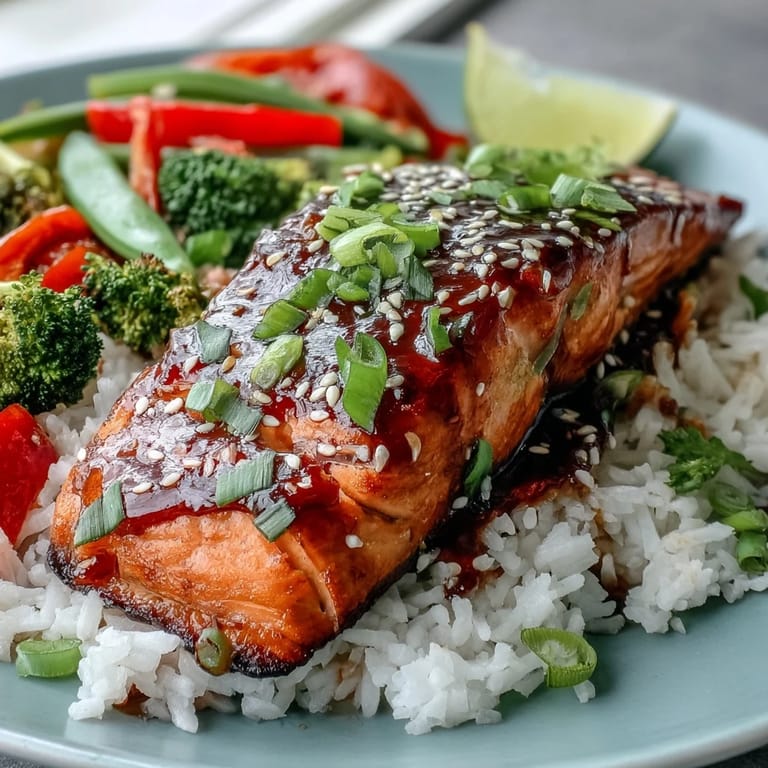
- Turn the salmon carefully and immediately pour the glaze over the fillets. Continue cooking for 3 to 4 minutes, spooning that glaze back over the fish every minute or so—this is what creates that glossy, caramelized coating that makes people think you trained in restaurant kitchens. The salmon is done when it flakes easily and the glaze has thickened noticeably.
- Cook your vegetables while the salmon finishes:
- In a separate pan or steamer, cook the broccoli florets, snap peas, and red bell pepper slices until crisp-tender, about 3 to 4 minutes. Season lightly with salt and keep them just barely cooked so they keep their snap.
- Assemble with intention:
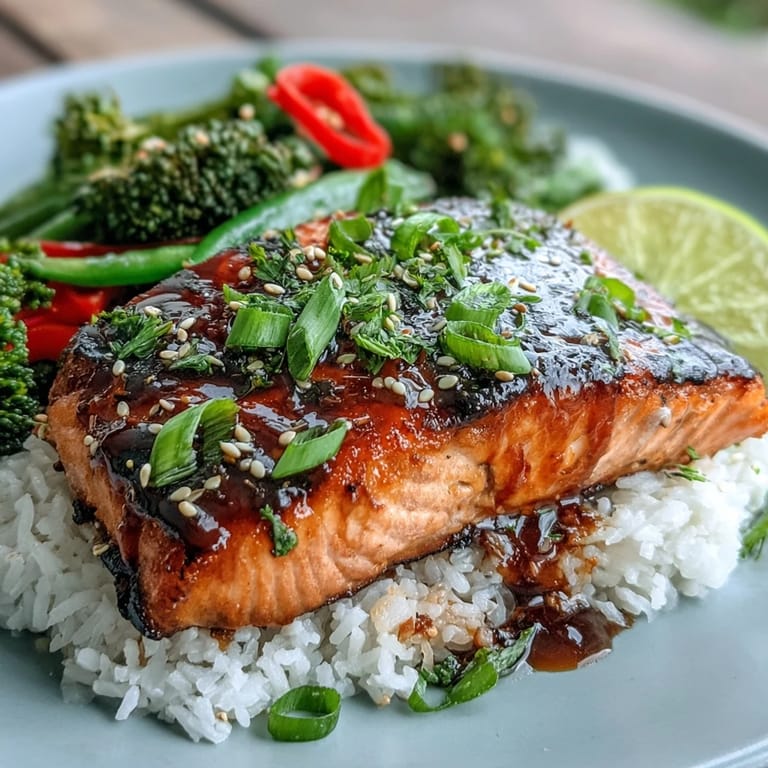
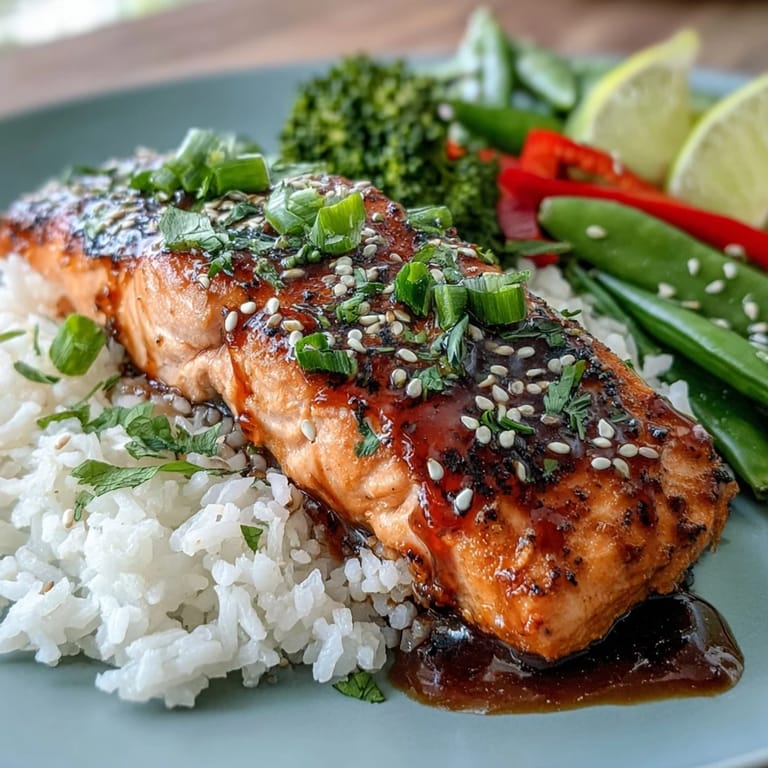
- Divide the cooked rice among bowls, then top each portion with the sautéed vegetables and a glazed salmon fillet. Drizzle any extra glaze from the pan over the top—don't waste a drop of that liquid gold.
- Finish with garnish:
- Scatter sliced green onions and toasted sesame seeds across each bowl and serve with lime wedges on the side. A squeeze of lime right before eating brightens everything and ties the flavors together.
 Save
Save There's something quietly satisfying about a meal that takes less time than you'd spend waiting for delivery but tastes like you actually tried. This dish somehow manages to feel both simple and special at the same time, which is exactly the kind of thing I want eating to feel like on busy nights.
Flavor Balance You Can Adjust
The beauty of this glaze is that it's genuinely forgiving and invites tinkering. If you taste it in the bowl before cooking and it feels too sweet, add an extra splash of soy sauce or rice vinegar and whisk again. Too salty? A squeeze more lime or a drizzle of maple syrup rebalances it instantly. I've added a pinch of red pepper flakes on nights when I wanted heat, or a tiny bit of sriracha stirred in for complexity. The ginger and garlic are already pretty assertive, so they hold up against whatever adjustments you make. The point is this isn't a formula you have to follow exactly—it's a starting place.
Vegetable Flexibility and Timing
The vegetables I've listed are just the beginning of what works here. I've swapped in sliced asparagus, thin carrot strips, or even baby bok choy depending on what's in my crisper drawer or what I'm craving texture-wise. The only rule that matters is keeping them moving in the pan so they stay crisp-tender rather than turning soft and mushy. Everything cooks in roughly 3 to 4 minutes at medium-high heat, so you can usually finish the vegetables right around the time the salmon hits its perfect done-ness. It becomes almost meditative, the rhythm of the kitchen in those final few minutes.
Why Twenty Minutes Actually Works
The timing on this recipe isn't arbitrary—it's built into how everything cooks. Rice takes the longest at 12 minutes simmering plus a 5-minute stand, and while that's happening, you're free to make the glaze, prep salmon, and mentally prepare. By the time your rice is resting, the salmon hits the pan, and suddenly you're just 7 minutes from eating. It teaches you something about cooking efficiently without stressing: start with what takes longest, then layer in the quick things at just the right moment.
- If you're in an even bigger hurry, pre-cooked rice or cauliflower rice cuts the rice cooking time to nothing.
- All your prep can happen while the rice cooks, so actually sit down and do it properly instead of rushing at the stove.
- Keep your ingredients measured and ready (mise en place, as they say) so the actual cooking feels calm instead of chaotic.
 Save
Save This is the kind of dinner that reminds you cooking doesn't have to be complicated to feel nourishing and a little bit special. I hope it becomes one of those recipes you make so often you stop thinking about it and just move through the steps like muscle memory.
Recipe FAQs
- → Can I use other types of fish for this dish?
Yes, this glaze works beautifully with other firm fish like cod, halibut, trout, or sea bass. Just adjust cooking time based on thickness of your fillets.
- → What can I substitute for maple syrup?
Honey makes an excellent substitute with similar consistency and sweetness. Agave nectar or brown sugar dissolved in warm water also work well in this glaze.
- → How do I know when the salmon is done?
The salmon is ready when it flakes easily with a fork and the internal temperature reaches 145°F (63°C). The flesh should turn opaque and slightly pink throughout.
- → Can I meal prep this maple soy salmon?
Absolutely! Cook the salmon and vegetables ahead, then store in separate containers. Reheat gently in the microwave or enjoy cold over salads. The glaze keeps everything moist and flavorful.
- → Is this glaze gluten-free?
The glaze becomes gluten-free when you use tamari or gluten-free soy sauce instead of regular soy sauce. Double-check all your ingredients, especially the soy sauce.
- → What vegetables work best with this salmon?
Broccoli, snap peas, and bell pepper are excellent choices. You can also try asparagus, zucchini, carrots, bok choy, or snow peas for variety and color.