 Save
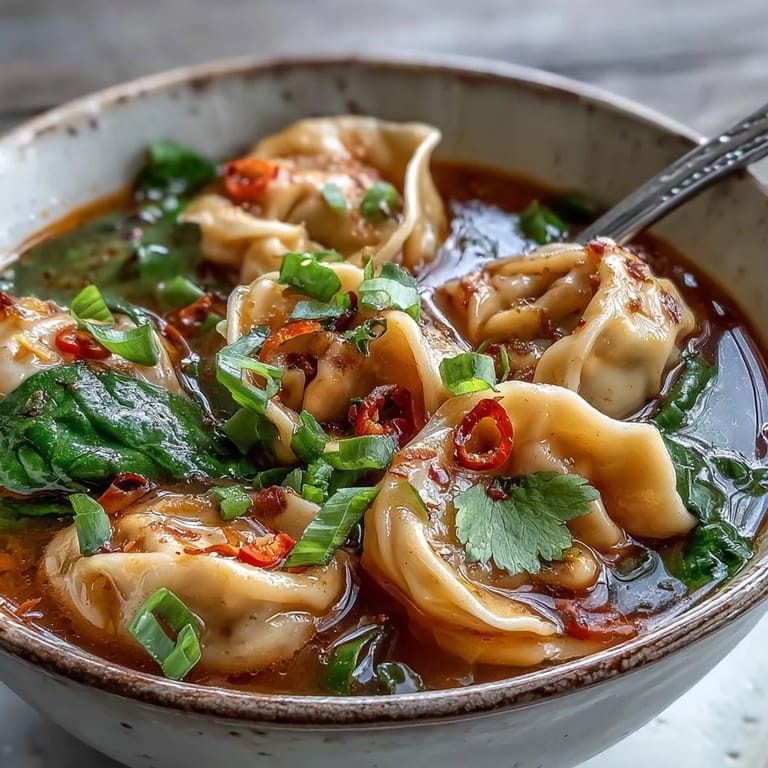
Save There's something about the smell of red curry paste hitting hot oil that makes you stop whatever you're doing and just breathe it in. I discovered this soup on a weeknight when I had exactly twenty minutes, a bag of frozen wontons in the freezer, and a growing pile of spinach that needed rescuing. What started as a quick fix became the soup I now make whenever I need something that tastes like I've been simmering it for hours but actually took less time than a phone call.
My sister showed up at my door on a rainy Thursday looking defeated, and I threw this together without thinking twice. She took one spoonful and said it tasted like I'd been planning to make it all day, which made me laugh because I'd literally started five minutes before she arrived. By the second bowl, she was already asking if I could write down the recipe, and now it's become her go-to when she wants to feel taken care of without the takeout box.
Ingredients
- Vegetable oil: Use something neutral that won't compete with the curry, and don't skip this step because it's what helps the paste release all its flavor.
- Thai red curry paste: This is your shortcut to depth, so don't apologize for using the jar version instead of making it from scratch.
- Fresh ginger and garlic: These two are the foundation, so mince them small and don't use the pre-jarred versions if you can help it, they taste tired.
- Low-sodium chicken or vegetable broth: Go low-sodium so you're in control of the salt, and use vegetable broth if you're leaning that direction.
- Coconut milk: Full-fat feels luxurious, but light works too if that's what's in your cupboard, the soup won't judge you.
- Soy sauce or tamari: Tamari is your gluten-free friend, and a splash of either is all you need to round out the flavors.
- Brown sugar: Just a teaspoon balances the heat and salt, it's a small ingredient that does big work.
- Lime juice: Fresh is non-negotiable here because it brightens everything at the end, so squeeze it yourself.
- Frozen wontons: Chicken, pork, or vegetable all work equally well, and keeping a bag on hand is like having dinner insurance.
- Baby spinach or bok choy: Spinach is easier to find, but bok choy gives a slightly different texture and earthiness if you're adventurous.
- Shredded carrots: They add sweetness and color, and using pre-shredded saves you three minutes of prep.
- Scallions: Slice these just before serving so they stay bright green and sharp tasting.
- Red chili: Optional but worth it if you like a little heat that builds with each spoonful.
- Fresh cilantro: This is the final note that makes everything feel intentional, don't leave it off.
Tired of Takeout? 🥡
Get 10 meals you can make faster than delivery arrives. Seriously.
One email. No spam. Unsubscribe anytime.
Instructions
- Wake up the curry base:
- Heat oil in a large pot over medium heat, then add curry paste, ginger, and garlic all at once. You'll know it's working when your kitchen starts to smell like a Thai restaurant and the mixture is sizzling gently, about 1 to 2 minutes.
- Build the broth:
- Pour in broth and coconut milk while whisking so they blend together smoothly without any lumps. Add soy sauce and brown sugar, then let it come to a gentle boil so the flavors have a chance to introduce themselves to each other.
- Cook the wontons:
- Drop the frozen wontons directly into the simmering broth and watch them sink, then float after a few minutes as they cook through. This usually takes 5 to 6 minutes, but check your package since different brands vary slightly.
- Wilt in the vegetables:
- Toss in the shredded carrots and greens and let them soften for just 1 to 2 minutes, you want them tender but still with a little personality. Don't walk away during this part because it happens faster than you'd think.
- Finish with brightness:
- Squeeze in the lime juice and taste as you go, adjusting with more soy sauce or lime until it feels balanced and alive on your tongue. This is your moment to make it yours.
- Serve with ceremony:
- Ladle into bowls and scatter scallions, chili, and cilantro over the top like you actually have your act together. Serve with lime wedges on the side so people can adjust the tartness to their preference.
 Save
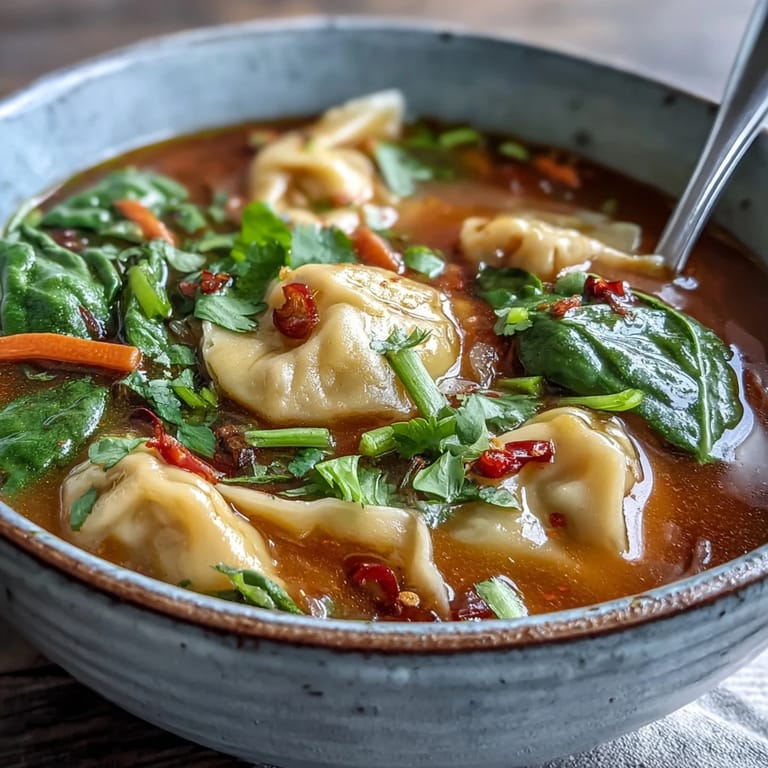
Save What made me keep making this soup wasn't the flavor, though that's certainly there, but the way it turned a regular Tuesday into something that felt nourishing in ways that had nothing to do with nutrition. It became the soup I reached for when someone needed proof that you could care deeply about feeding people without spending hours in the kitchen.
Flavor Adjustments You'll Want to Know
The beautiful thing about this soup is that it invites tinkering once you understand the balance. If it tastes too spicy, a touch more coconut milk softens the edges without making it bland. Too mild and you'll want to stir in another half teaspoon of curry paste or add fresh chili slices for a slow-building heat that doesn't overwhelm. The lime juice is your secret weapon for brightness, but go easy because you can always add more and you can't take it back.
Greens and Substitutions That Work
I've rotated through every green in the produce section with this soup, and they all have something to offer. Spinach is the gentle option, wilting into the broth like it was always meant to be there, while bok choy brings a slight crunch and earthiness that holds up better to the bold flavors. Swiss chard works beautifully too if you tear away the tougher stems and add those separately for a few extra seconds. Kale is the stubborn friend that needs a little more time, so add it earlier in the cooking if that's what you're using.
Making It Your Own
Once you've made this soup a few times, you'll start seeing it as a template instead of a prescription. I've added mushrooms, baby corn, and even a splash of fish sauce when I was feeling bold, and each version feels like a small discovery. The wontons are flexible too, vegetable ones work just as well as the meat versions, and some people swear by shrimp wontons if that's what calls to them.
- Stir in a tablespoon of fish sauce if you want to deepen the umami and add a layer of savory complexity.
- Keep a small dish of extra curry paste at the table so people can customize their own heat level without judgment.
- This soup actually tastes better the next day when the flavors have had time to get comfortable with each other.
 Save
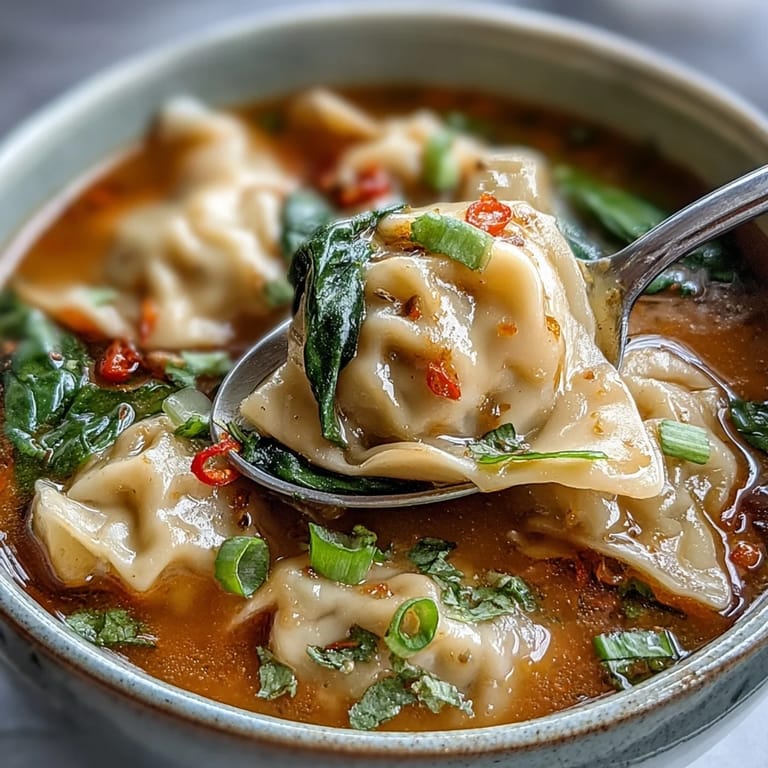
Save This is the soup I come back to again and again, not because it's complicated or impressive, but because it delivers every single time. It's become my proof that the best meals are the ones that feel effortless but taste like they were made with intention.
Recipe FAQs
- → Can I use fresh wontons instead of frozen?
Yes, fresh wontons work beautifully. Since they're uncooked, they'll need 3-4 minutes to simmer until they float to the surface and the filling is cooked through. Adjust cooking time accordingly to avoid overcooking.
- → What greens work best in this soup?
Baby spinach and bok choy are ideal because they wilt quickly without becoming mushy. You can also use chopped kale, Swiss chard, or tatsoi. Just add heartier greens like kale a minute or two earlier so they tenderize properly.
- → How can I make this soup more or less spicy?
Start with 2 tablespoons of red curry paste for moderate heat. For more spice, add an extra teaspoon or include fresh chili slices. To mellow the heat, reduce the curry paste to 1 tablespoon or use a mild brand. The coconut milk naturally helps temper the spice level.
- → Can I make this vegetarian or vegan?
Absolutely. Use vegetable broth instead of chicken broth, and choose vegetable wontons (many brands offer plant-based options). Swap soy sauce for tamari if needed. The result is just as satisfying and flavorful.
- → Will this soup reheat well for leftovers?
The broth and greens reheat beautifully, but wontons can become soggy after sitting in liquid. For best results, store the broth and greens separately from the wontons. Reheat the soup on the stovetop and add freshly cooked or frozen wontons when ready to serve.
- → What can I serve alongside this soup?
Steamed jasmine rice is a classic accompaniment that soaks up the fragrant broth. You could also serve with crispy spring rolls, a simple cucumber salad with rice vinegar, or garlic bread for dipping. The soup is substantial enough to stand alone as a main course.